Wednesday, 24 September 2014

Heran and Egret

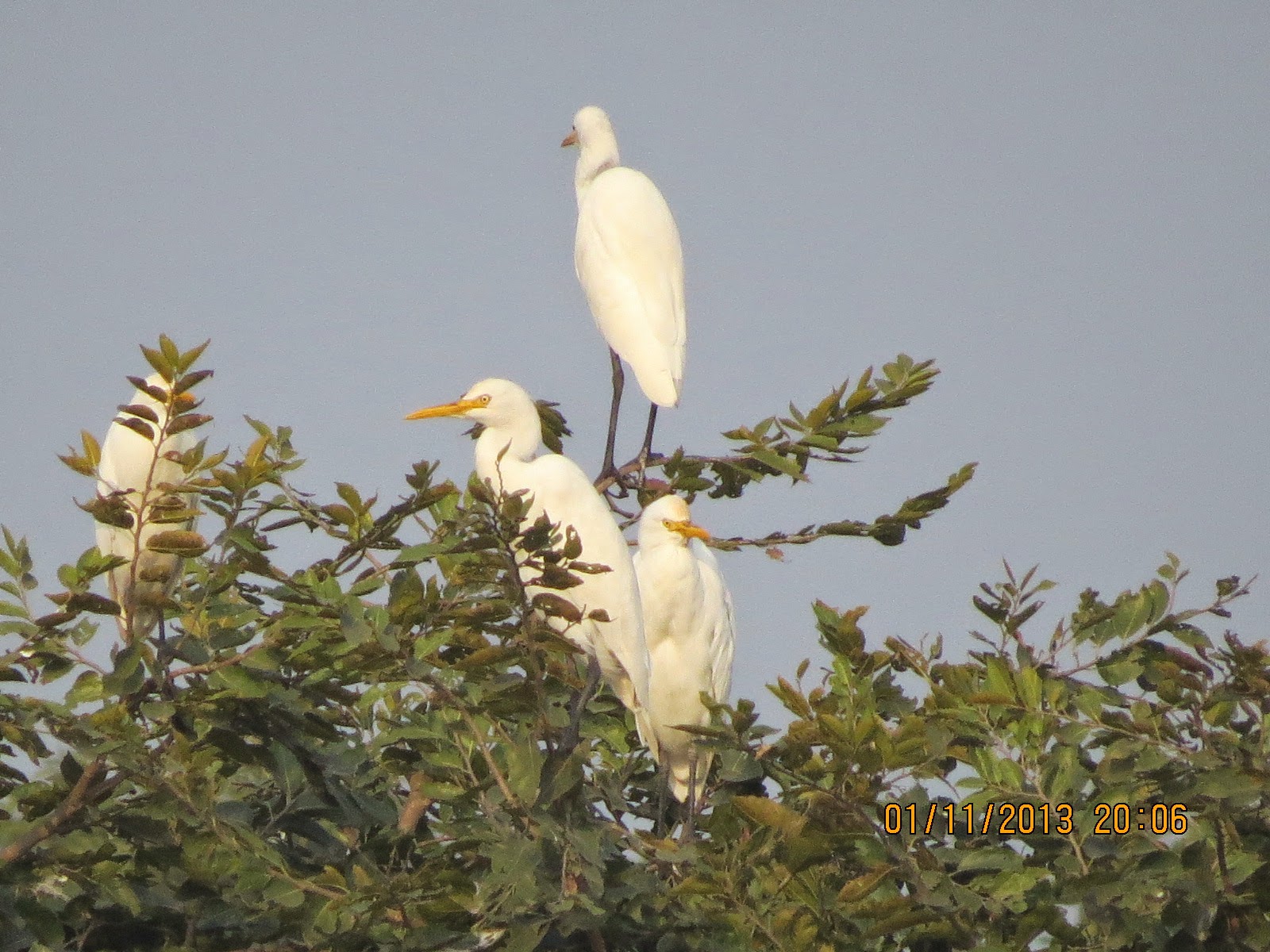
Eastern Great Egret
The eastern great egret (Ardea alba modesta), a white heron measuring 83–103 cm (33–41 in) in length and weighing 0.7–1.2 kg (1.5–2.6 lb), the eastern great egret is a large heron with all-white plumage. Its bill is yellow in the breeding season and black at other times, and its long legs are red or black. The colours of the bare parts change during the breeding season. The breeding plumage is also marked by long neck plumes and a green facial area.
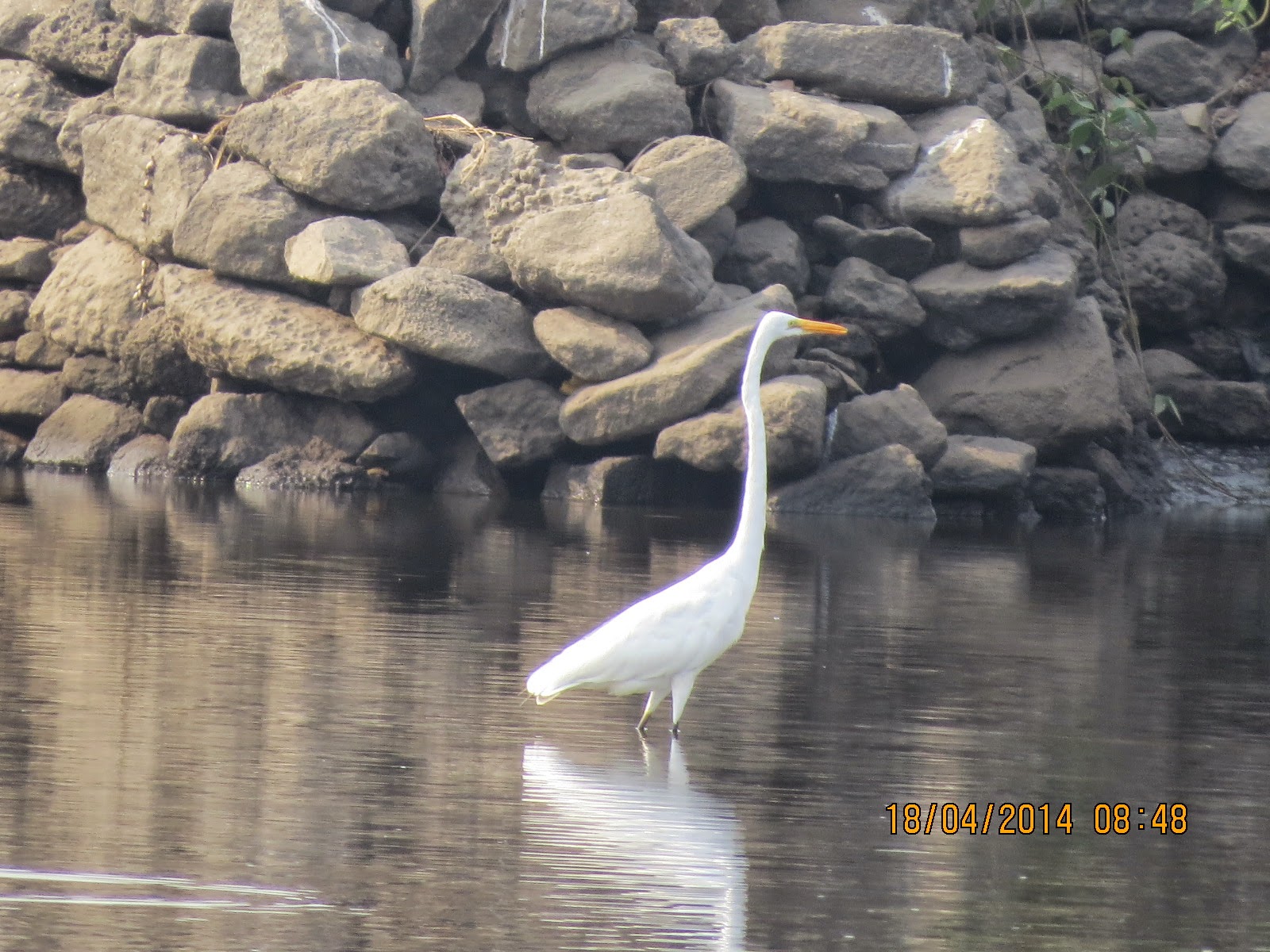
 eastern great egret 
 eastern great egret colony
The diet includes vertebrates such as fish, frogs, small reptiles, small birds and rodents, and invertebrates such as insects, and crustaceans. The eastern great egret hunts by wading or standing still in shallow water and "spearing" prey with its bill. 
 All photographs are captured in Lodha heaven Dombivili east Thane, Maharastra

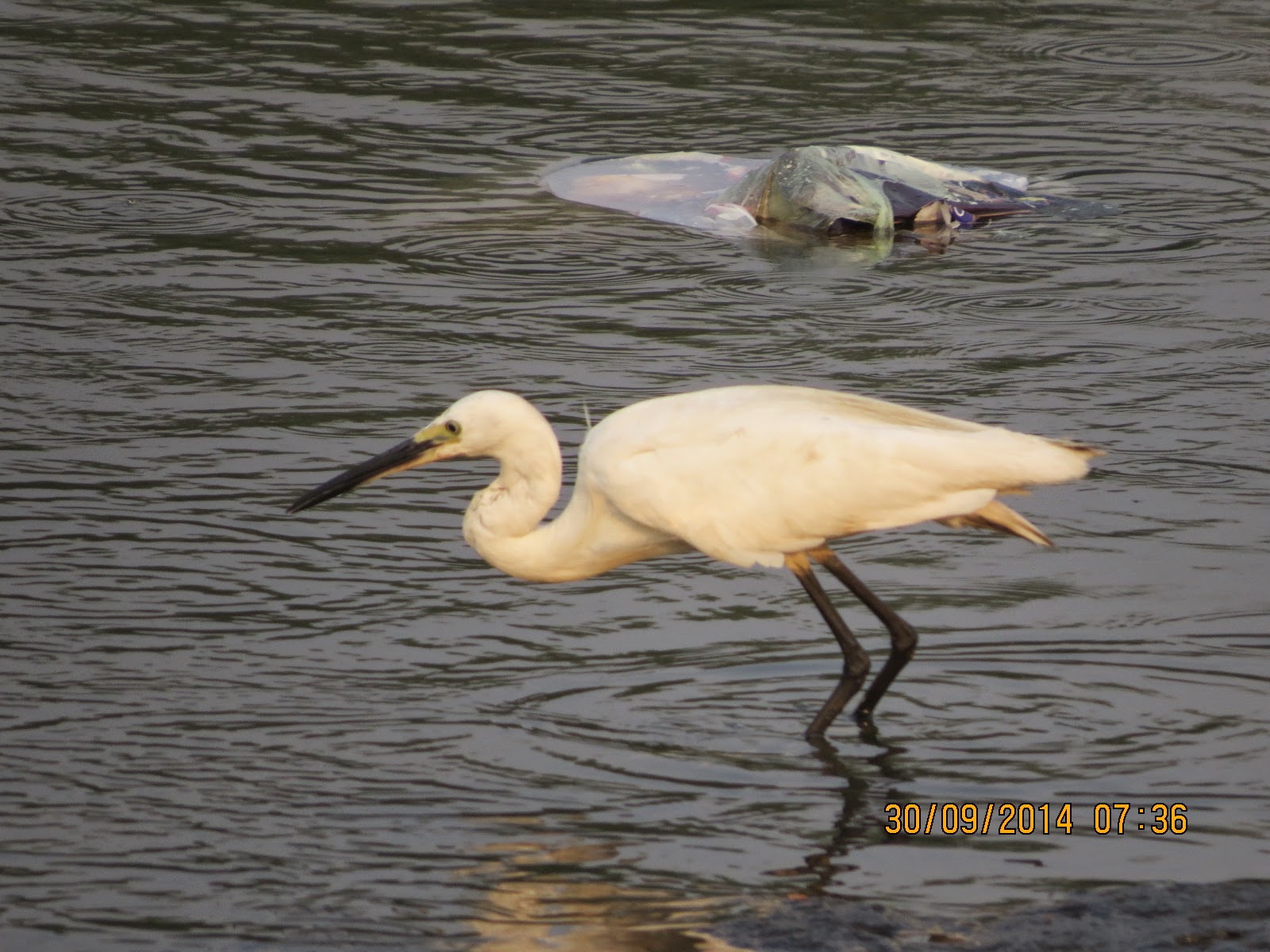
Snowy Egret,
as literature said snowy egret is found in USA mexico, jamaica etc countryes but the captured pics are similar to that species,
 All photographs are captured in Lodha heaven Dombivili east Thane, Maharastra
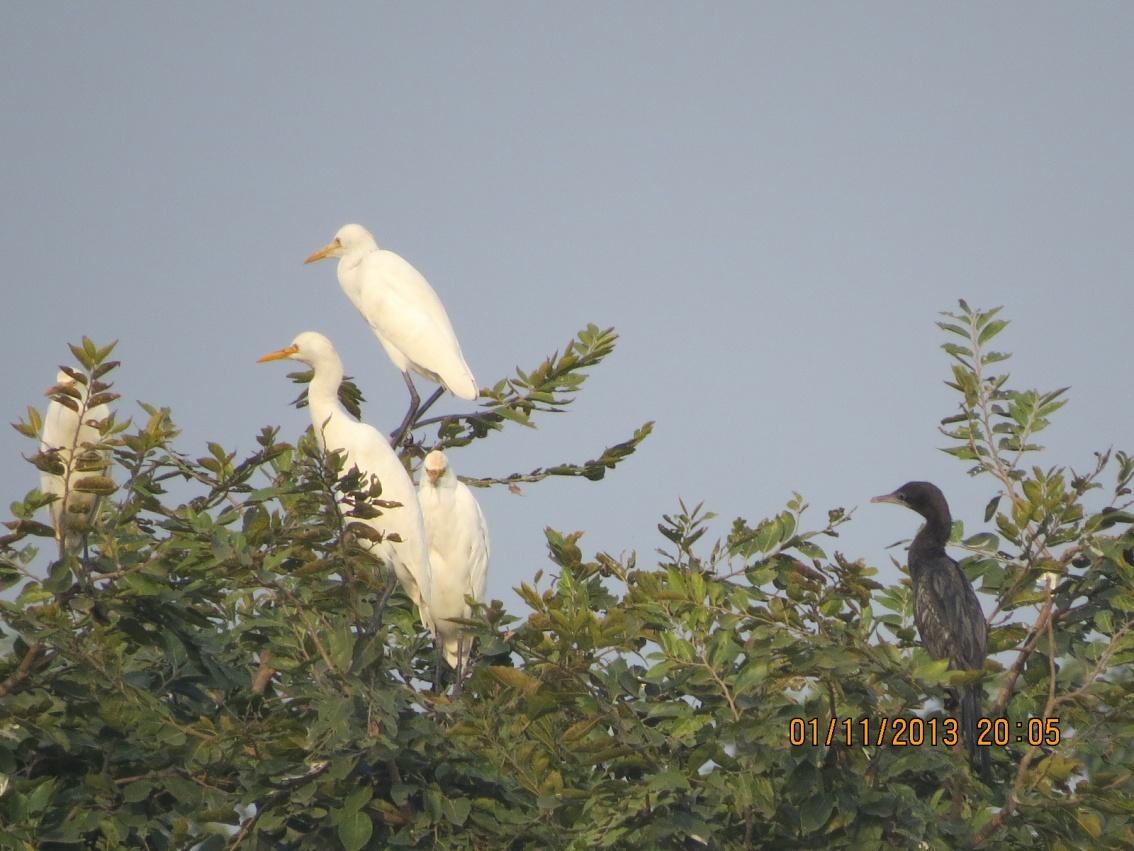
 Egret with Little cormorents


The moment of catching fish
Little bitten
 The little bittern (Ixobrychus minutus) is a wading bird in the heron familyIt is a very small bittern; measuring 25–36 cm (9.8–14.2 in) in length, 40–58 cm (16–23 in) across the wings and weighing 59–150 g (2.1–5.3 oz). 
 It is among the smallest herons on earth. It has a short neck, longish bill and buff underparts. The male's back and crown are black, and the wings are black with a large white patch on each wing. The female has a browner back and a buff-brown wing patch.


The little bittern's breeding habitat is reed beds. It nests on platforms of reeds in shrubs, and four to eight eggs are laid. These bitterns feed on fish, insects and amphibians.
 All photographs are captured in Lodha heaven Dombivili east Thane, Maharastra

Tuesday, 23 September 2014

Kingfisher

Kingfishers are a group of small to medium sized brightly coloured birds. There are roughly 90 species of kingfisher. All have large heads, long, sharp, pointed bills, short legs, and stubby tails. Most species have with little differences between the sexes. While kingfishers are usually thought to live near rivers and eat fish, most of the kingfisher species in the world live away from water and eat small invertebrates. Like other members of their order they nest in cavities, usually tunnels dug into the natural or artificial banks in the ground.
 Small Blue kingfisher/ common kingfisher

 All photographs are taken in Lodhaheavem Dombivili east, Thane, Maharastra

Pied Kingfisher
The pied kingfisher (Ceryle rudis) is a water kingfisher  is mostly found over clear lakes and rivers before diving for fish makes it distinctive. Males have a double band across the breast while females have a single gorget that is often broken in the middle. They are usually found in pairs.

This kingfisher is about 17 cm long and is white with a black mask, a white supercilium and black breast bands. The crest is neat and the upperparts are barred in black. 
 Pied kingfisher


 This kingfisher feeds mainly on fish, although it will take crustaceans and large aquatic insects such as dragonfly larvae. It usually hunts by hovering over the water to detect prey and diving vertically down bill-first to capture fish. When not foraging, they have a straight rapid flight and have been observed flying at nearly 32 mph.
White Brested Kingfisher


 The white-throated kingfisher (Halcyon smyrnensis) also known as the white-breasted kingfisher or Smyrna kingfisher, is a tree kingfisher, It can often be found well away from water where it feeds on a wide range of prey that includes small reptiles, amphibians, crabs, small rodents and even birds. During the breeding season they call loudly in the mornings from prominent perches including the tops of buildings in urban areas or on wires.
 All photographs are taken in Lodhaheavem Dombivili east, Thane, Maharastra

Sunday, 14 September 2014

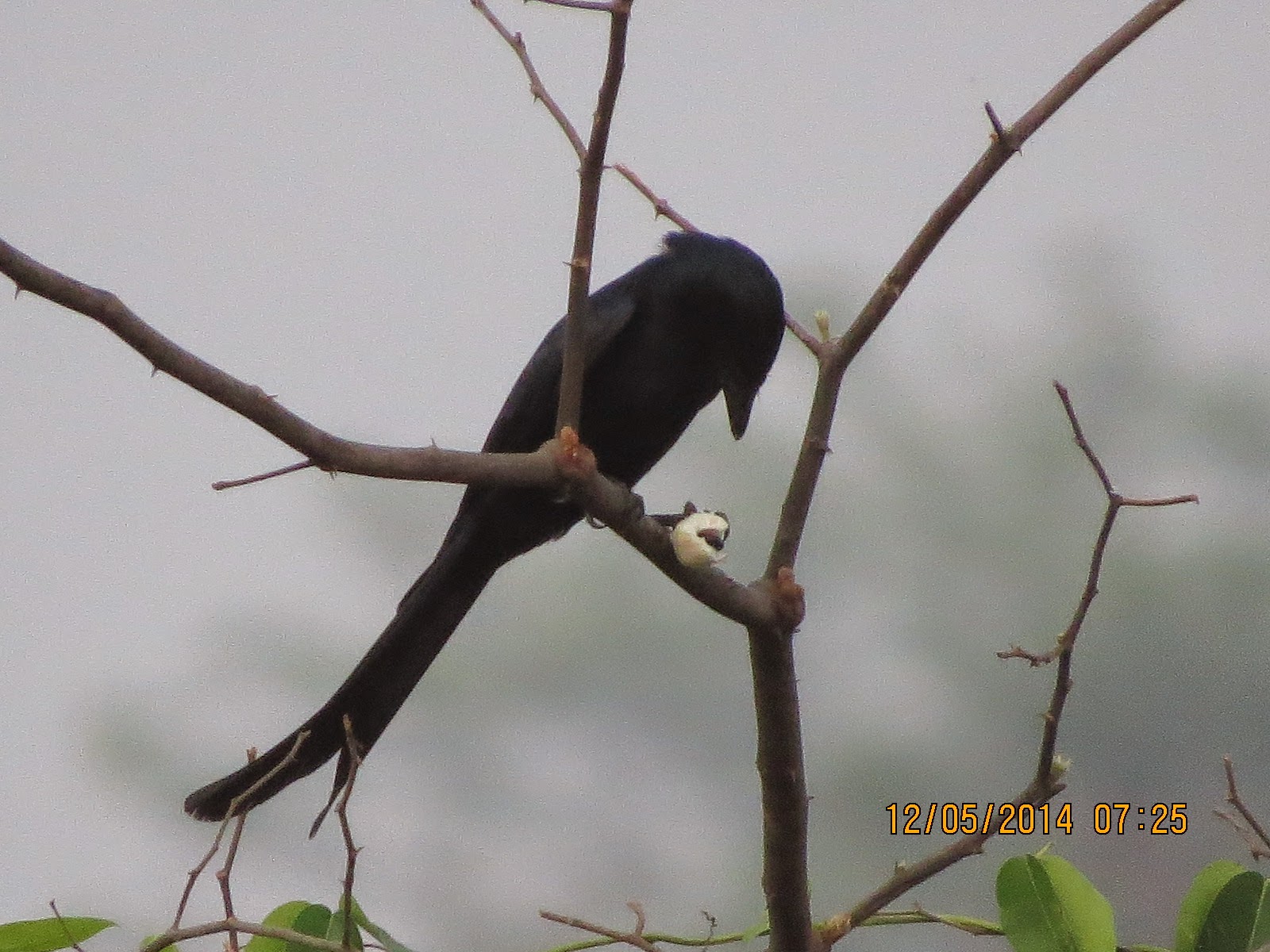
Black drongo (Dicrurus macrocercus)


The black drongo (Dicrurus macrocercus) is a small wholly black bird with a distinctive forked tail Feeding on insects, it is common in open agricultural areas and light forest throughout its range, The species is known for its aggressive behaviour towards much larger birds, such as crows, This behaviour earns it the informal name of King Crow. Smaller birds often nest in the well-guarded vicinity of a nesting black drongo The sexes cannot be told apart in the field.
They congregate in fields that are being ploughed, picking up exposed caterpillars and beetle grubs. As many as 35 birds have been seen at such congregations. Drongos benefit from this association and are more successful in their foraging. 
Black drongos breed mainly in February and March, Eggs are laid close to the first rains in April. The usual clutch is three or rarely four eggs laid in a cup nest placed in the fork of an outer branch of tree.
The young leave the nest after about 16 to 20 days after hatching. They do not have the fork in the tail until three weeks. The parents continue to feed and protect them for a month.
They feed mainly on insects such as grasshoppers, cicadas, termites, wasps, bees, ants, moths, beetles and dragonflies. They sometimes fly close to tree branches, attempting to disturb any insects that may be present. 
All photographs are taken in Lodha heaven Dombivili east Thane, Maharastra

Thursday, 11 September 2014

Oriental maqpie & Indian robin

Oriental Magpie-Robin 

                                        oriental magpie-robin 

The oriental magpie-robin (Copsychus saularis) is a small passerine bird considered an Old World flycatcher. They are distinctive black and white birds with a long tail that is held upright as they forage on the ground or perch conspicuously. 

This species is 19 centimetres long, including the long tail that is usually held cocked upright. The male has black upperparts, head and throat apart from a white shoulder patch. The underparts and the sides of the long tail are white. Femalesare greyish black above and greyish white

The oriental magpie-robin is found in open woodland and cultivated areas often close to human habitations.Magpie robins breed mainly from March to July in India.They nest in tree hollows or niches in walls or building. The female is involved in most of the nest building that happens about a week before the eggs are laid. 
 The Indian robin,  Indian robin male
 The diet of magpie robins includes mainly insects and other invertebrates. Although mainly insectivorous, they are known to occasionally take flower nectar,
  The Indian robin
 The Indian robin (Saxicoloides fulicatus]) is commonly found in open scrub areas and often seen running along the ground or perching on low thorny shrubs and rocks.The males are have a brown back colour with a white shoulder patch or stripe whose visible extent can vary with posture.
The females are brownish above, have no white shoulder stripe and are greyish below with the vent.
The breeding season is December to September but varies according to region and usually begins with the first rains

                                                    Indian robin male
All the photographs are taken in Lodha heaven, river side, Thane Dist Maharastra.

Tuesday, 9 September 2014

Little Cormorant

\\Bserver\user_new backup\Ankur\Ankur\cormorent\cormo.JPG
                                                Little cormorant
The little cormorant is about 50 centimetres (20 in) long and only slightly smaller than the Indian cormorant (Phalacrocorax fuscicollis).
The Indian cormorant has a narrower and longer bill which ends in a prominent hook tip, blue iris and a more pointed head profile.
\\Bserver\user_new backup\Ankur\Ankur\cormorent\IMG_0967.JPG
The breeding adult bird has a glistening all black plumage with some white spots and filoplumes on the face. There is also a short crest on the back of the head. The crest becomes inconspicuous and a small and well-marked white patch on the throat is sometimes visible. The sexes are indistinguishable in the field, but males tend to be larger.Some abnormal silvery-grey plumages have been described.
\\Bserver\user_new backup\Ankur\Ankur\cormorent\IMG_0972.JPG
Little cormorants tend to forage mainly in small loose groups and are often seen foraging alone. They swim underwater to capture their prey, mainly fish. They propel themselves underwater using their webbed feet. Captured fishes are often brought up to the surface to swallow them and during this time other birds including other little cormorants, 
Indian cormorants tend to fish communally in larger groups. Like all other cormorants, they will emerge from water and will hold out their wings and stay immobile for a while. The behaviour has been suggested to be for wing-drying.
\\Bserver\user_new backup\Ankur\Ankur\cormorent\IMG_0635.JPG
C:\Documents and Settings\bhupesh\My Documents\My Pictures\JB\ankur\canon sx50\bIRD Bird\heran\heron colony 2.JPG
The breeding season of the little cormorant is between July to September in northern India and November to February in southern India. They may nest beside Indian pond herons and little egrets in colonies.
\\Bserver\user_new backup\Ankur\Ankur\cormorent\IMG_0975.JPG
\\Bserver\user_new backup\Ankur\Ankur\cormorent\IMG_0539.JPG
\\Bserver\user_new backup\Ankur\Ankur\cormorent\cormorent.JPG
All the pictures are captured at LODHA HEVEN Dombivali East Thane Maharashtra 

Saturday, 16 August 2014

Greenish worblar and Ashy Prinia


Greenish Warbler (Phylloscopus trochiloides)  

 Greenish worblar pic-1
The greenish warbler (Phylloscopus trochiloides)  is a typical leaf warbler in appearance, grayish-green above and off-white below. 
Greenish worblar pic-2

                                        Ashy Prinia or Ashy Wren-Warbler (Prinia socialis)

The Ashy Prinia or Ashy Wren-Warbler (Prinia socialis) is a small warbler. It is a common bird in urban gardens and farmland in many parts of India and its small size, distinctive colours and upright tail make it easy to identify.
 These 13–14 cm long warblers have short rounded wings and longish graduated cream tail tipped with black subterminal spots. The tail is usually held upright and the strong legs are used for clambering about and hopping on the ground. 

 captured the photographs of ashy prinia during its breakfast time, in Lodha heaven dombivili east
captured the photographs of ashy prinia during its breakfast time, in Lodha heaven dombivili east
They have a short black bill. The crown is grey and the underparts are rufous in most plumages. In breeding plumage, adults of the northern population are ash grey above, with a black crown and cheek.

 This passerine bird is found in dry open grassland, open woodland, scrub and in home gardens in many cities.
Like most warblers, the Ashy Prinia is insectivorous. The song is a repetitivetchup, tchup, tchup or zeet-zeet-zeet. Another call is a nasal tee-tee-tee. It also makes a sound like "electric sparks" during the fluttery flight which is thought to be produced by the wings.
 It is most easily distinguished by the loud snapping noise it makes during flight. How this noise is produced we do not know for certain. 
photo graphs are taken in lodha heaven, dombivili east thane, maharastra